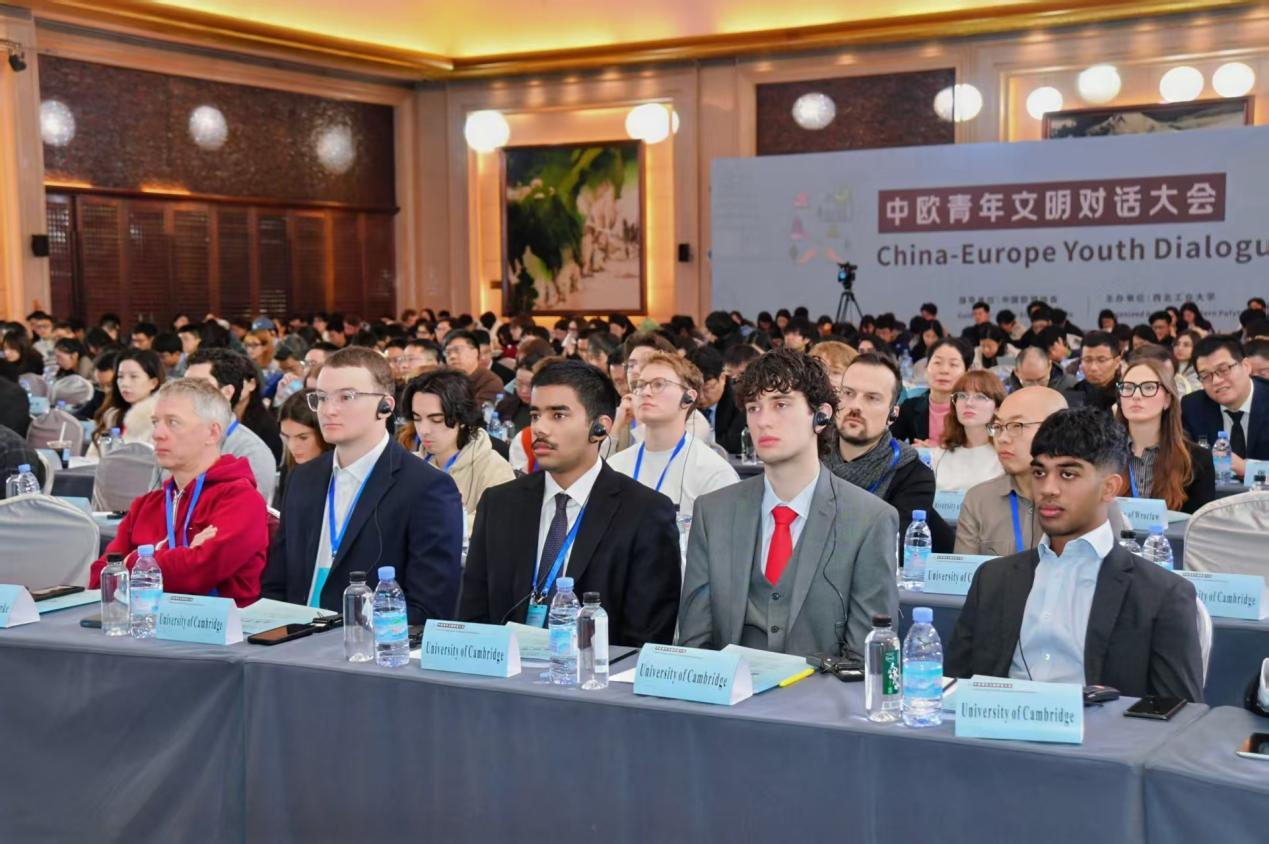
Marking the 50th anniversary of the establishment of diplomatic relations between China and the European Union, the China-Europe Youth Dialogue on Civilizations recently opened in Xi’an. The event was co-organized by the China-EU Association and hosted by Northwestern Polytechnical University (NPU). More than 380 young participants from 17 universities across over 10 European countries, together with students from 19 partner universities in China, gathered at the starting point of the ancient Silk Road to engage in in-depth exchanges on topics including civilizational dialogue, technological innovation, and sustainable development, injecting youthful vitality into the friendship between China and Europe.
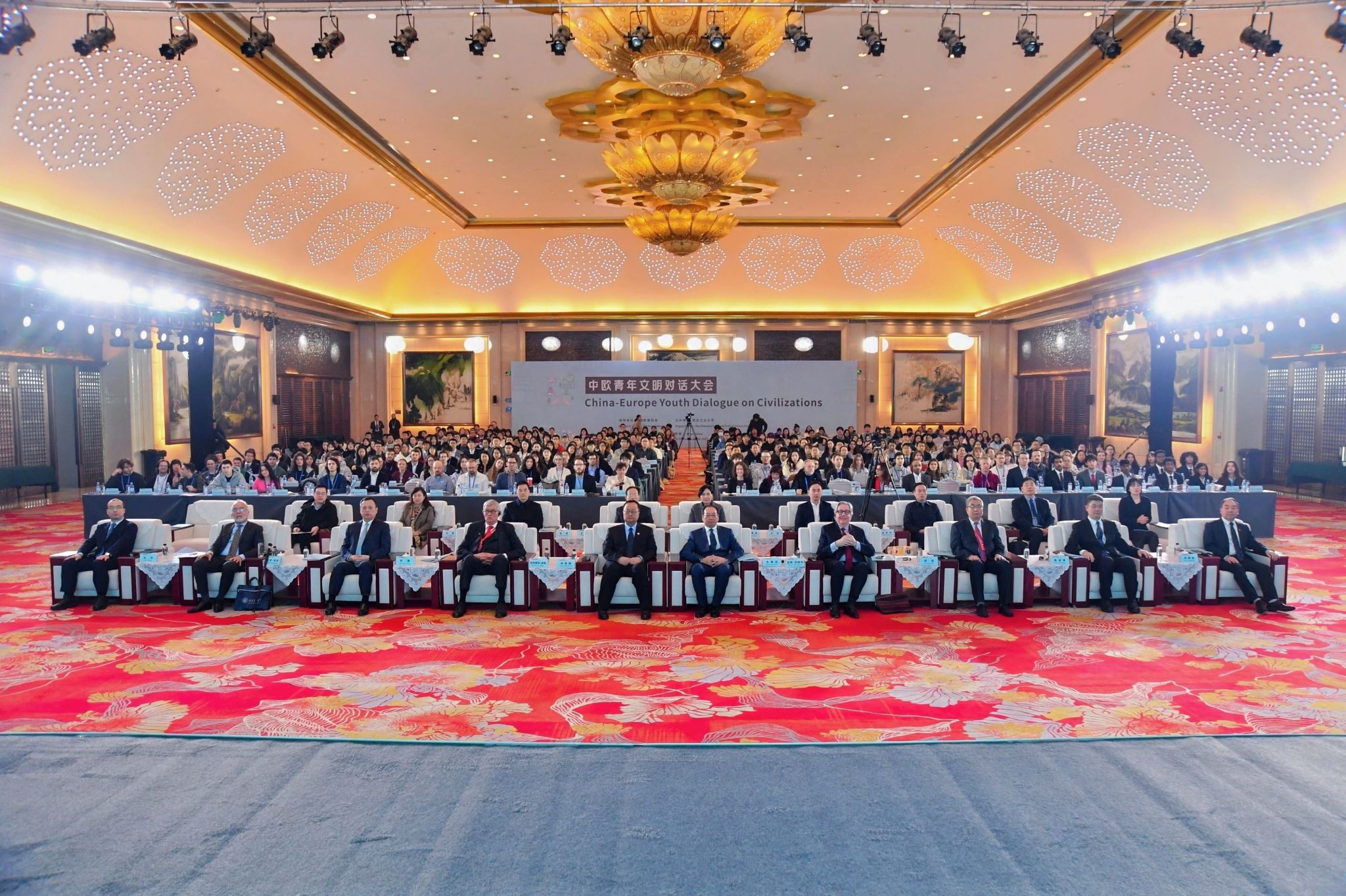
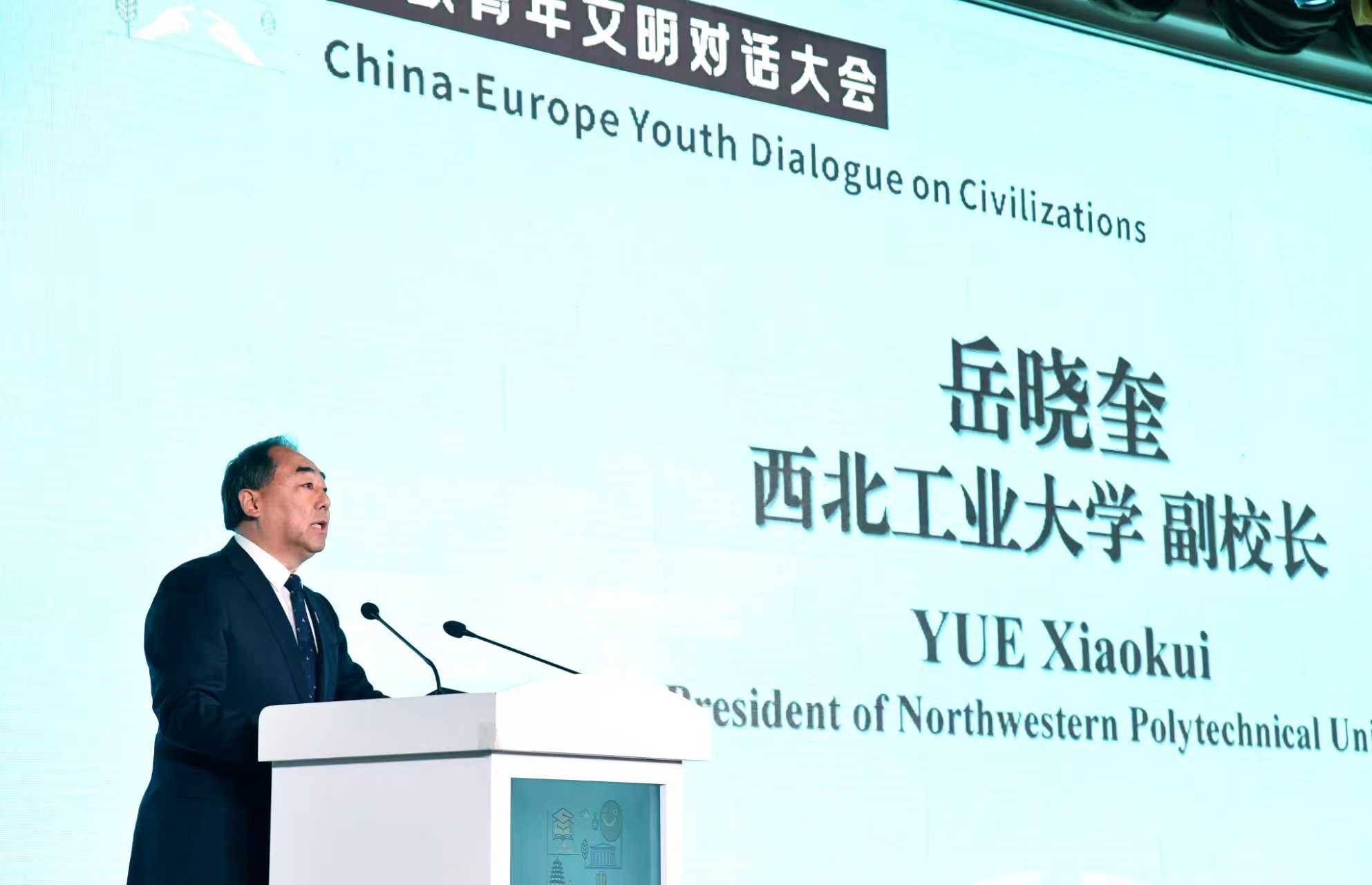
Multiple officials attended the opening ceremony and made speeches. The conference was chaired by Yue Xiaokui, Vice President of NPU.
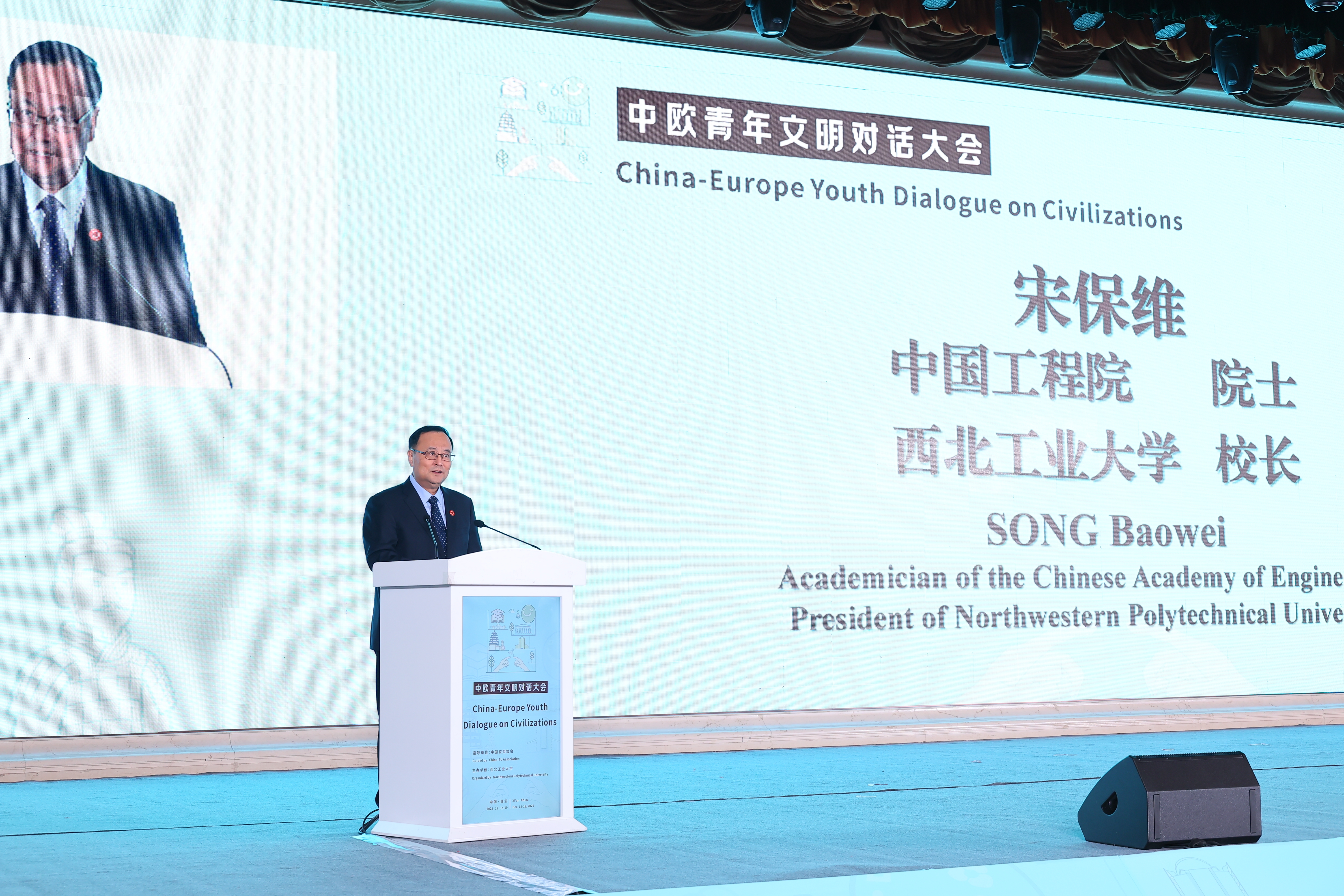
In his welcoming remarks, Song Baowei, President of NPU emphasized that young people represent the future and hope of China–Europe relations and bear an irreplaceable historical responsibility in promoting the sound and sustainable development of bilateral ties. He noted that the conference, themed around five key areas—Enlightening Civilizations through Wisdom, Green Energy and Low-Carbon Development, Joint Protection of the Ecosystem, Innovation for Life, and Digital Governance for Public Benefit—timely addresses global development challenges from a youth perspective. He encouraged young participants to take this gathering as a new starting point, becoming explorers of mutual learning among civilizations, practitioners of scientific and technological cooperation, and inheritors of China–Europe friendship, while enhancing understanding and trust through dialogue.
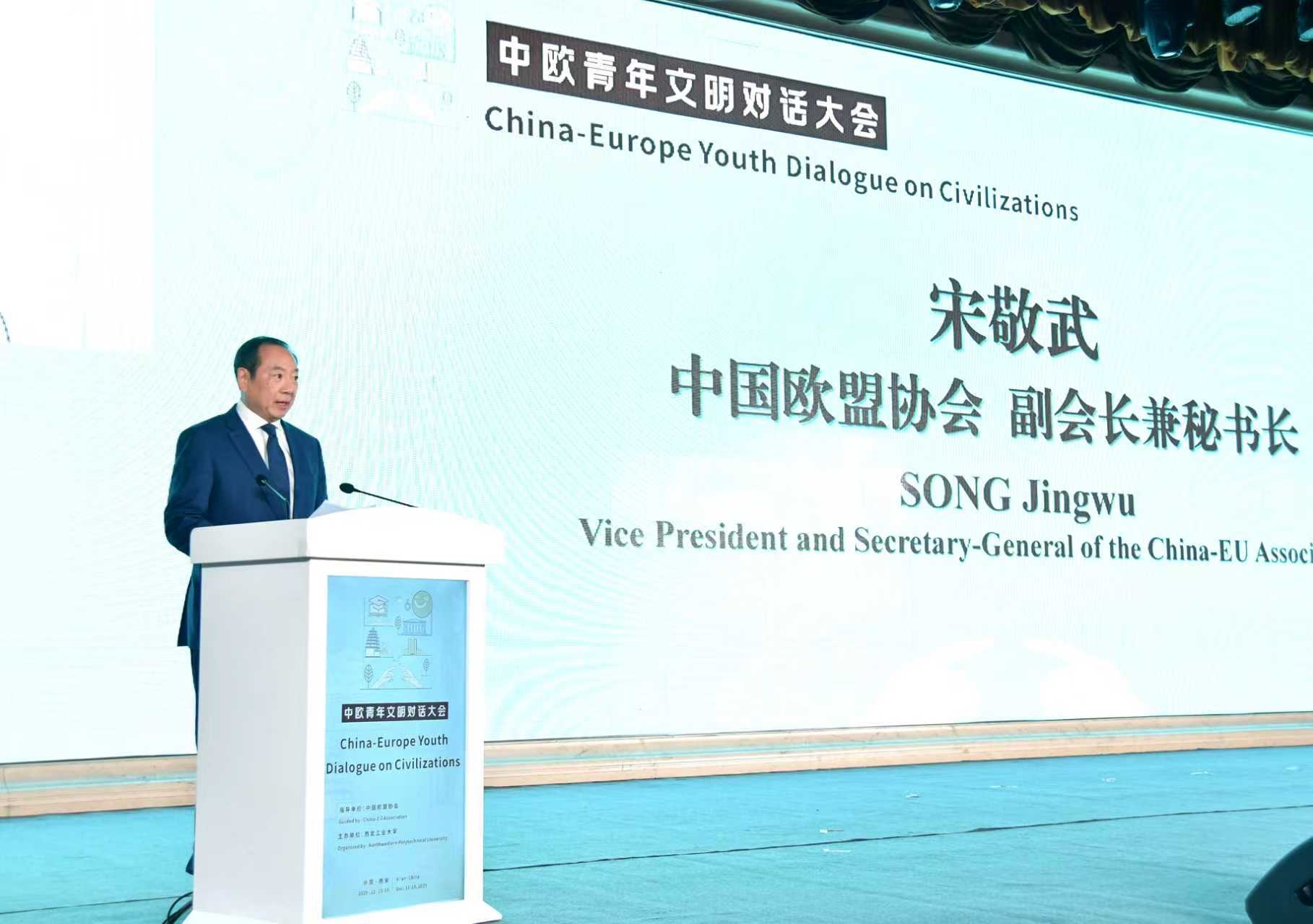
Song Jingwu, Vice President and Secretary-General of the China-EU Association, reviewed the fruitful achievements of China-EU cooperation over the past five decades and stressed that deeper collaboration is essential in addressing global challenges. He proposed three expectations for young representatives: to deepen candid dialogue through existing platforms, to seek common ground while respecting differences in order to build consensus, and to cultivate cross-continental friendships and networks. He encouraged young people to move beyond one-sided narratives and inject sustained momentum into the China–EU comprehensive strategic partnership.
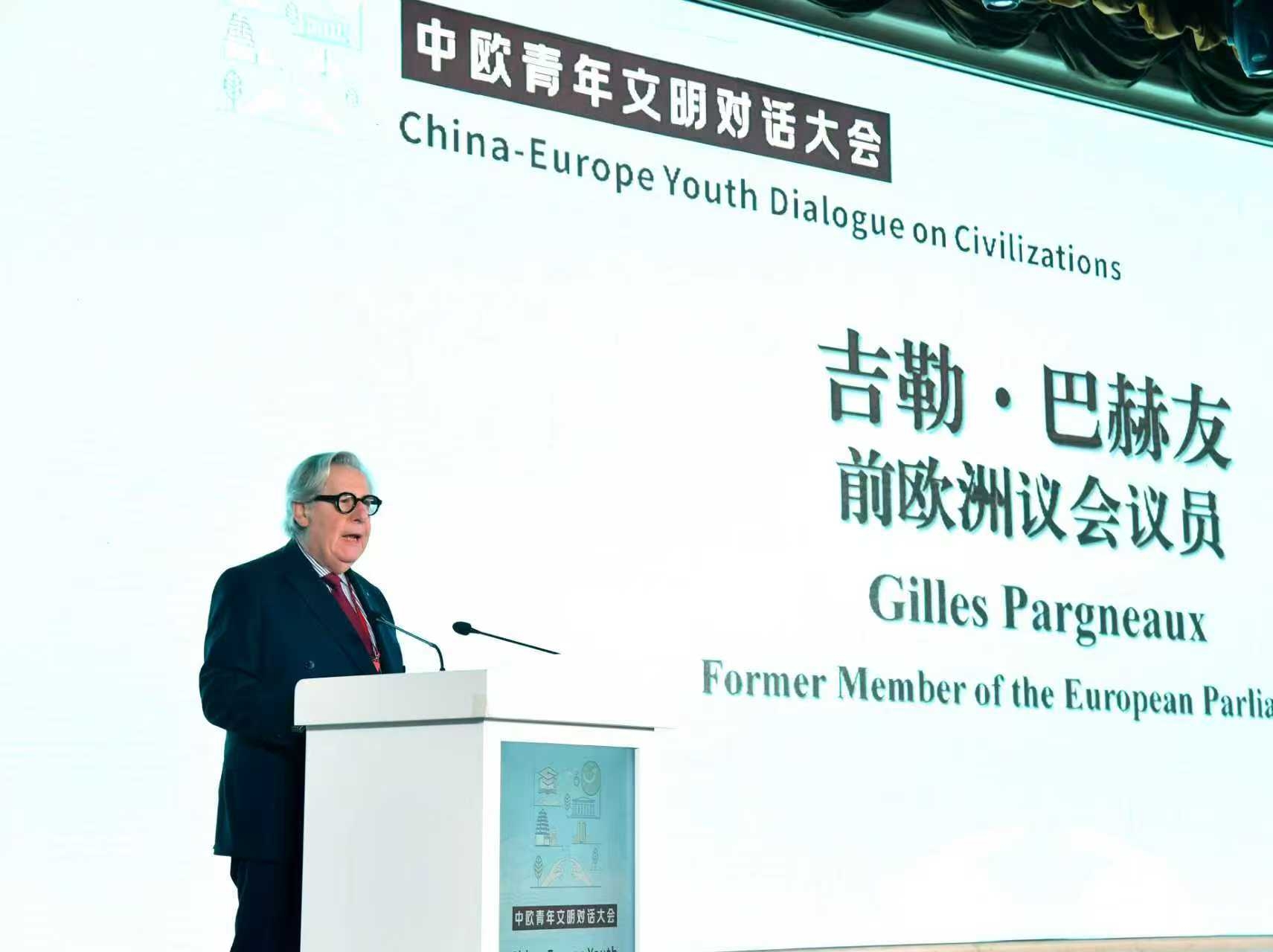
Former Member of the European Parliament Gilles Pargneaux noted that Xi’an, as the starting point of the ancient Silk Road, stands as a powerful symbol of civilizational exchange. He remarked that 50 years of China–Europe cooperation have been rooted in dialogue, mutual respect, and humanistic exchanges. As the backbone of the future, young people should work together to address global challenges and build a new Silk Road of knowledge, innovation, and mutual respect.
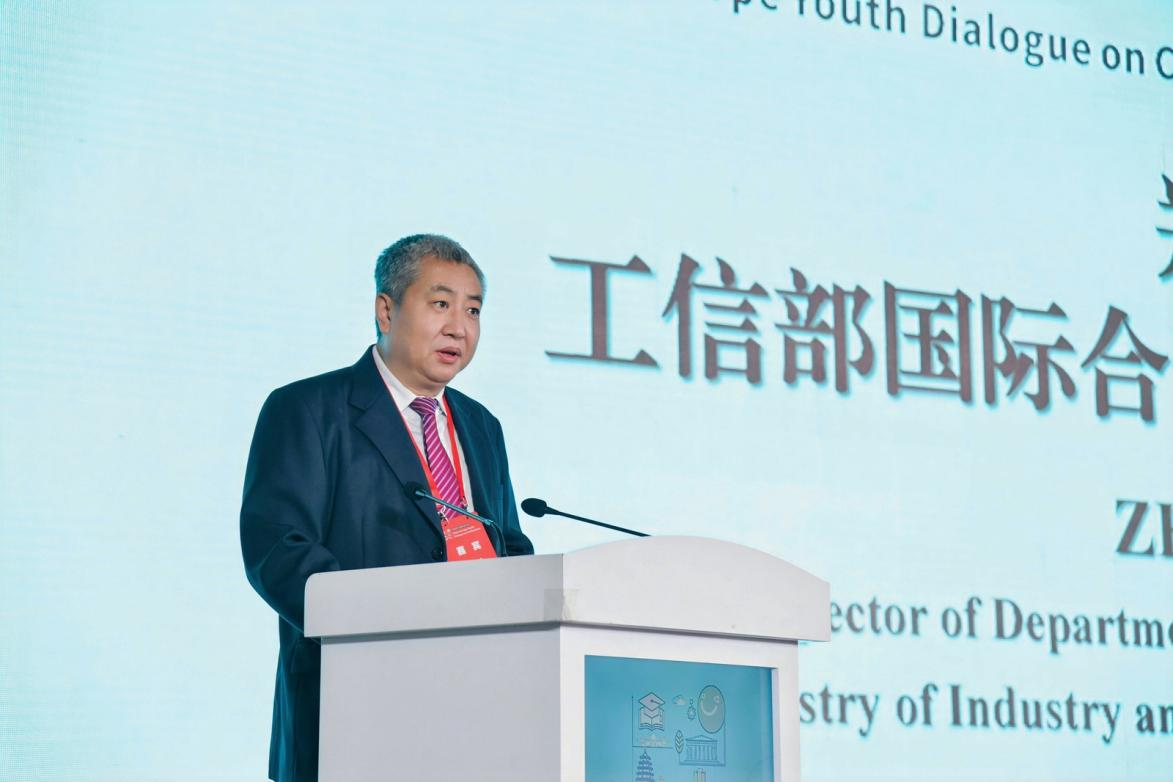
Zheng Kai, Second-Level Inspector of the Department of International Cooperation of the Ministry of Industry and Information Technology, pointed out that this year marks the 50th anniversary of China–EU diplomatic relations. As major representatives of Eastern and Western civilizations, China and Europe share deep cultural foundations that underpin cooperation. In the face of unprecedented global changes and challenges, civilizational dialogue must respect diversity and build consensus. With their active thinking and innovative spirit, young people should take the lead in promoting mutual learning among civilizations. He expressed hope that the conference would serve as a platform for intellectual exchange, emotional connection, and friendship-building, injecting youthful energy into China–EU cooperation.
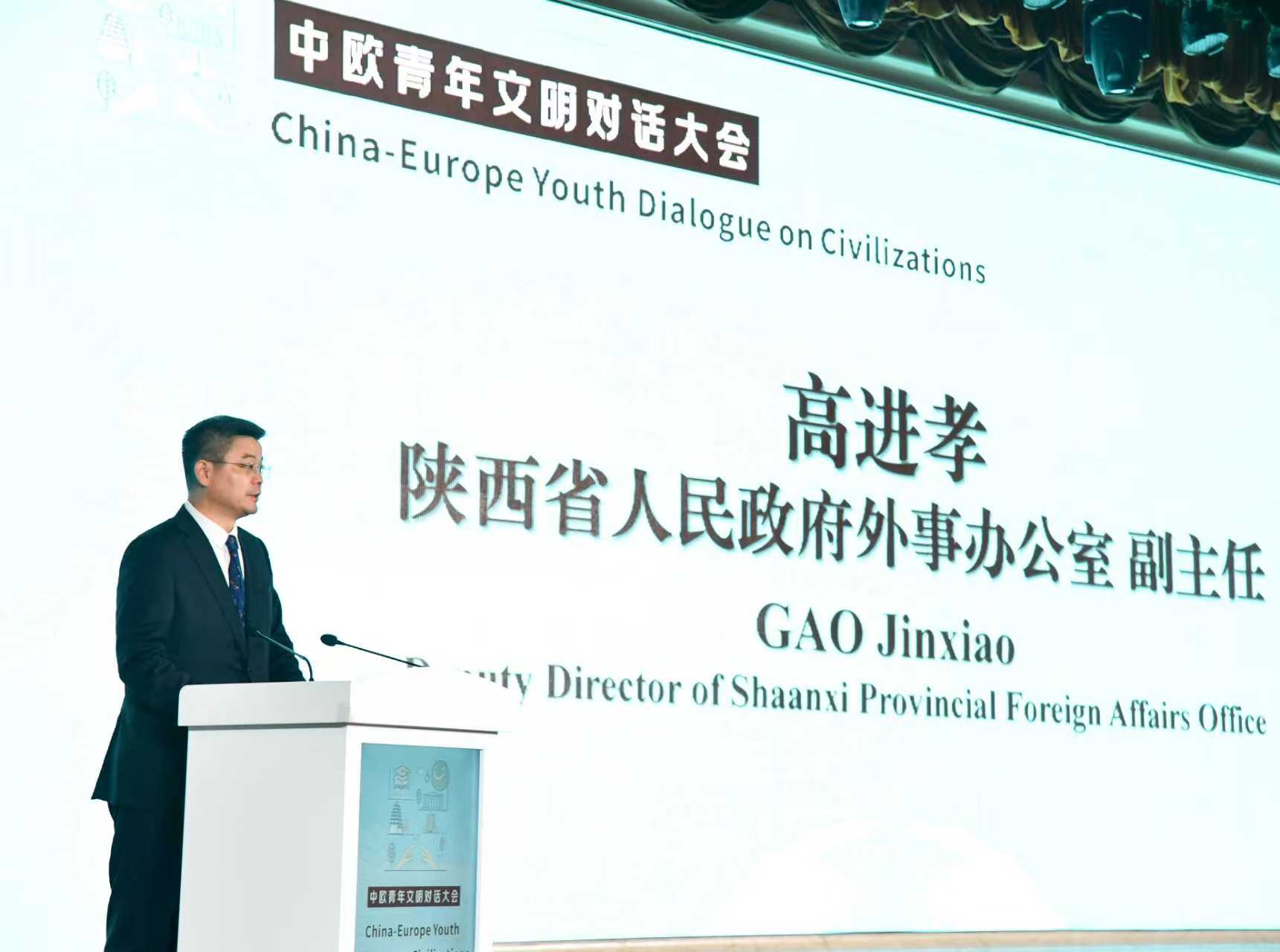
Gao Jinxiao, Deputy Director of the Shaanxi Provincial Foreign Affairs Office, emphasized that civilizational exchange is particularly significant at the milestone of the 50th anniversary of China–EU relations. As the starting point of the ancient Silk Road, Shaanxi Province is actively implementing the Global Civilization Initiative with an open and inclusive approach. Through tangible achievements such as China–Europe freight trains, direct international flights, growing trade, and an expanding network of sister cities, Shaanxi has built efficient platforms for China–Europe exchanges. He stated that Shanxi will continue to provide platforms and services for young people from China and Europe, contributing to the future development of bilateral relations.
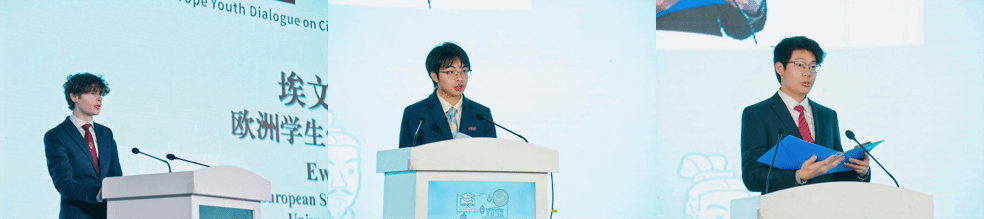
At the opening ceremony, Evan Kohler, a student from the University of Cambridge, Liang Junxiang from Tsinghua University, and Ma Zhizhong from NPU delivered speeches as representatives of European and Chinese youth. From a youth perspective, they shared reflections on China–Europe civilizational exchange, sustainable development, and technological innovation, demonstrating a shared vision of young people shouldering the responsibilities of the times and working together toward a better future.
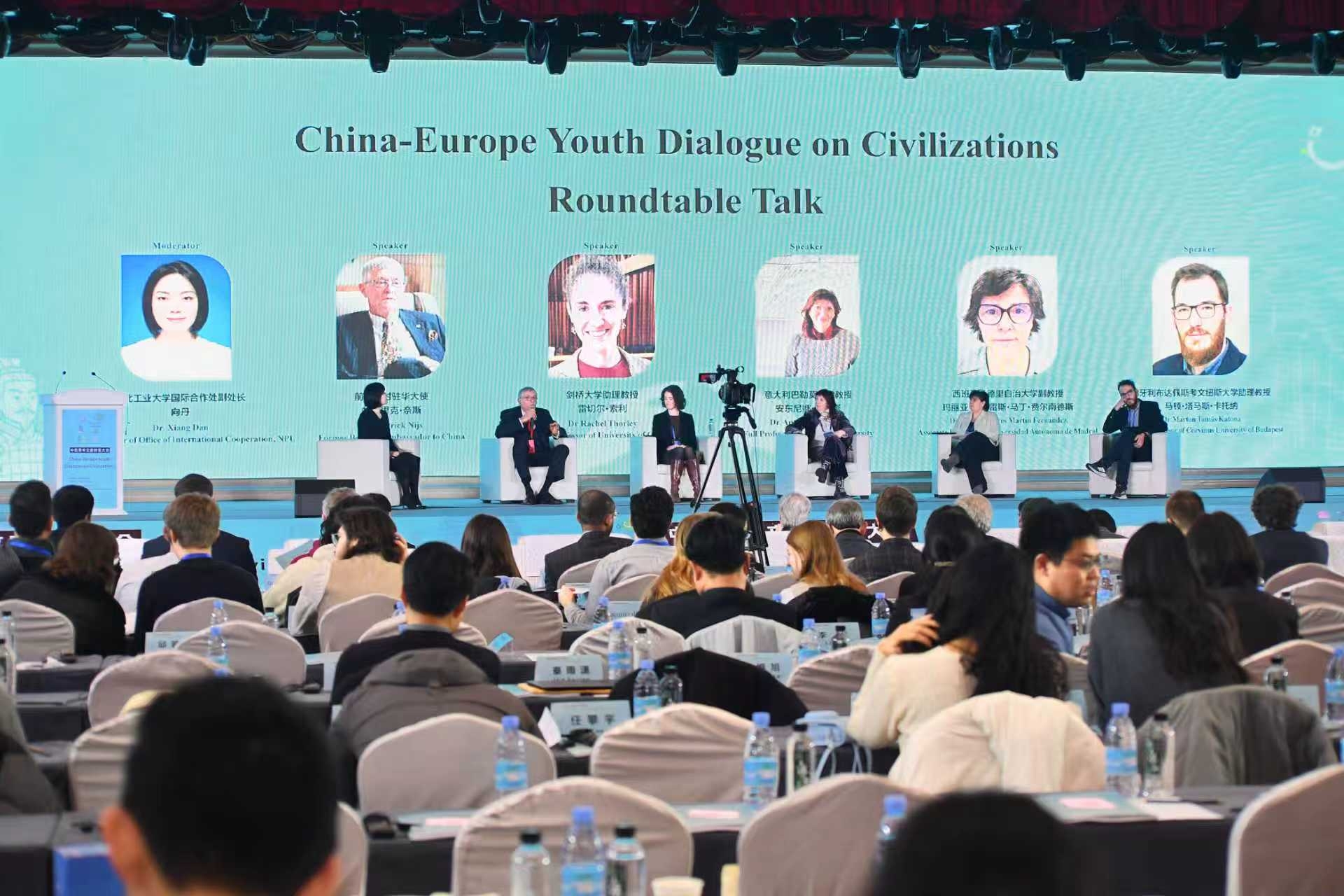
During the roundtable discussions, participants engaged in in-depth dialogue on topics such as climate change, renewable energy transition, cultural heritage protection, and biodiversity conservation. The sessions were marked by lively discussions and dynamic exchanges of ideas.
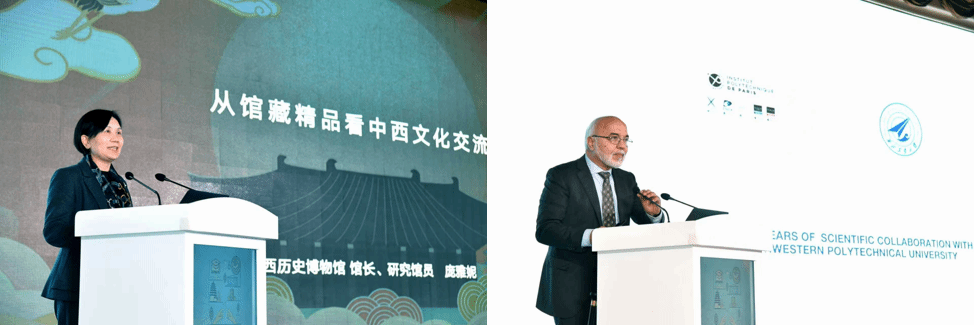
In the keynote session, Pang Yani delivered a presentation titled Five Thousand Years of Chinese Civilization as Reflected in the Masterpieces of the Shaanxi History Museum, while Ed Mooney presented Insights into China–Europe Cooperation in Education and Science and Technology. Approaching the theme of mutual learning among civilizations from historical and contemporary perspectives respectively, the two keynote speeches provided profound insights for the conference.
During the conference, five parallel sub-forums—Enlightening Civilizations through Wisdom, Green Energy and Low-Carbon Development, Joint Protection of the Ecosystem, Innovation for Better Lives, and Digital Governance for Public Benefit—will be held concurrently. In addition, Chinese traditional culture experience sessions, including guzheng music, printmaking, calligraphy, and Qingqiang Opera, are offered, enabling China–Europe youth to deepen friendships through intellectual exchange and cultural immersion.
The conference represents a vivid practice of the university’s commitment to the Global Civilizations Initiative and to promoting dialogue and mutual learning among China–Europe youth, as well as an important step in advancing international cooperation. Building on its long-standing foundation of cooperation with European partners, the university will continue to serve as a bridge for communication among young people, promote the deep integration of people-to-people exchanges and scientific collaboration, and lay a solid youth foundation for a more stable, dynamic, and forward-looking China–Europe relationship.
Translators: Yang Runze; Li Yiwen
