The School of Life Sciences at Northwestern Polytechnical University has published a research paper as a first-author affiliation in Cell, revealing how deep-sea isopods adapt to dark, cold and food-scarce environments.
The paper, titled “Deep-sea megafauna co-opts microbial energy metabolism genes to withstand ultra-long starvation,” focuses on the supergiant isopods Bathynomus jamesi and Bathynomus doederleini. Professor Wang Kun from NPU is one of the co-first authors.
The study found that deep-sea isopods use a dual survival strategy: storing energy through structures such as an enlarged stomach and fat body, while lowering basal metabolic rate to extend energy use. Researchers also identified ND1, an energy metabolism-related gene acquired from symbiotic microbes through horizontal gene transfer. After transfer, ND1 underwent duplication and became precisely regulated by epigenetic mechanisms such as histone acetylation.
Functional experiments showed that ND1 can suppress energy metabolism under low-temperature conditions, reduce mitochondrial activity and improve starvation tolerance. In zebrafish models simulating deep-sea cold conditions, ND1 knock-in increased starvation tolerance by 37 percent.
The findings offer new insight into how deep-sea megafauna balance growth and survival in extreme environments.
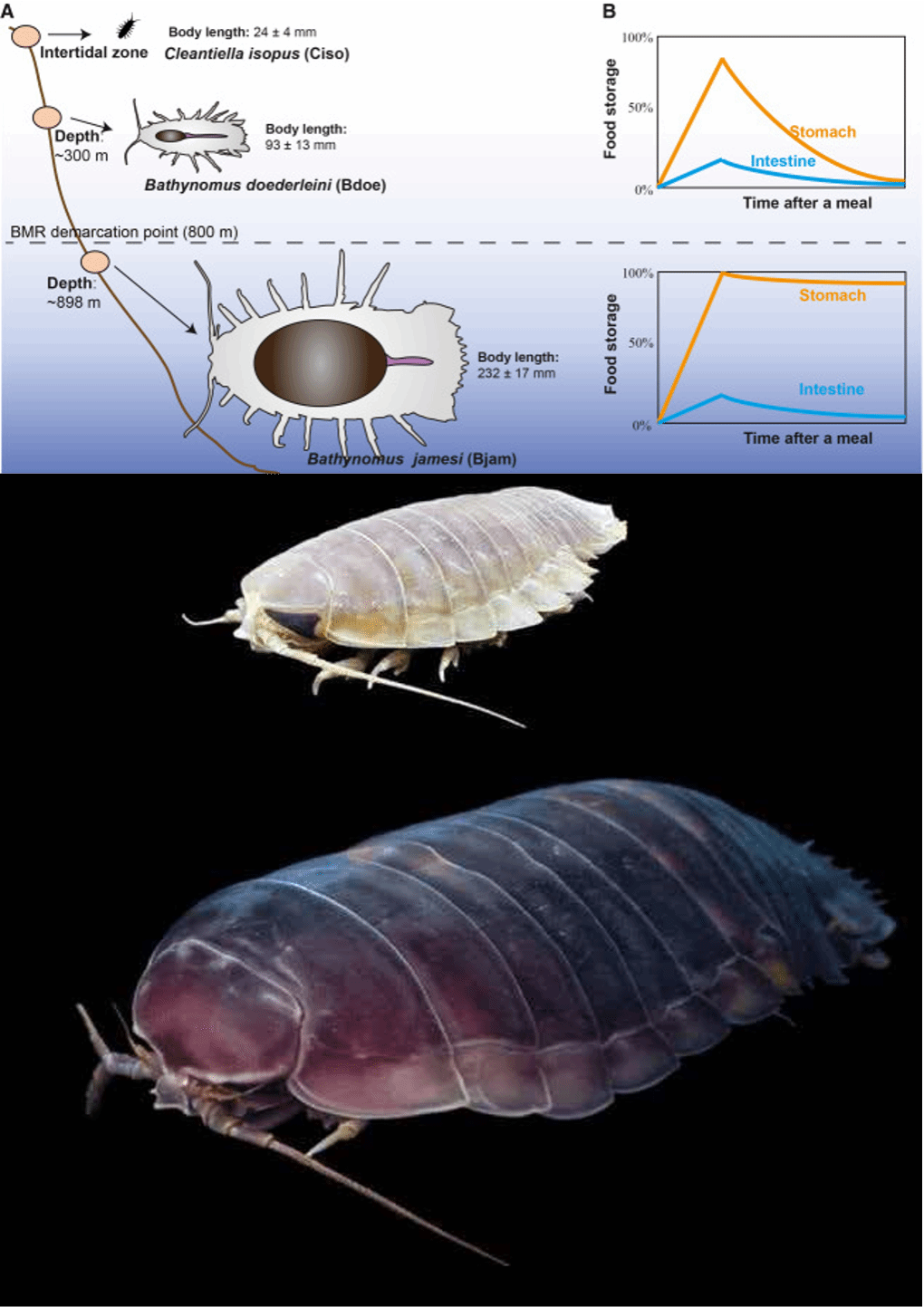
(Souece:Northwestern Polytechnical University)
