To further enhance international students’ understanding of China and provide them with more immersive opportunities to experience the vitality of Chinese culture, the International College continues to offer its “Cultural China” thematic course on China studies this semester. Focusing on key elements of traditional Chinese culture, the course brings together a wide range of topics, including historical development, intangible cultural heritage, traditional craftsmanship, and Chinese philosophy, with the aim of broadening students’ cultural horizons and cultivating cultural awareness and personal growth.
On the afternoon of September 8, the first session of this semester’s “Cultural China” series was launched with the theme “China’s Intangible Cultural Heritage — A Dialogue on Tie-Dyeing Art.” The session was jointly hosted by Li Jing, Li Xuehong, and An Yiwen from the Chinese Language Center, attracting more than 60 international students from 11 countries, including Kazakhstan, Morocco, Malaysia, Mongolia, and Thailand.
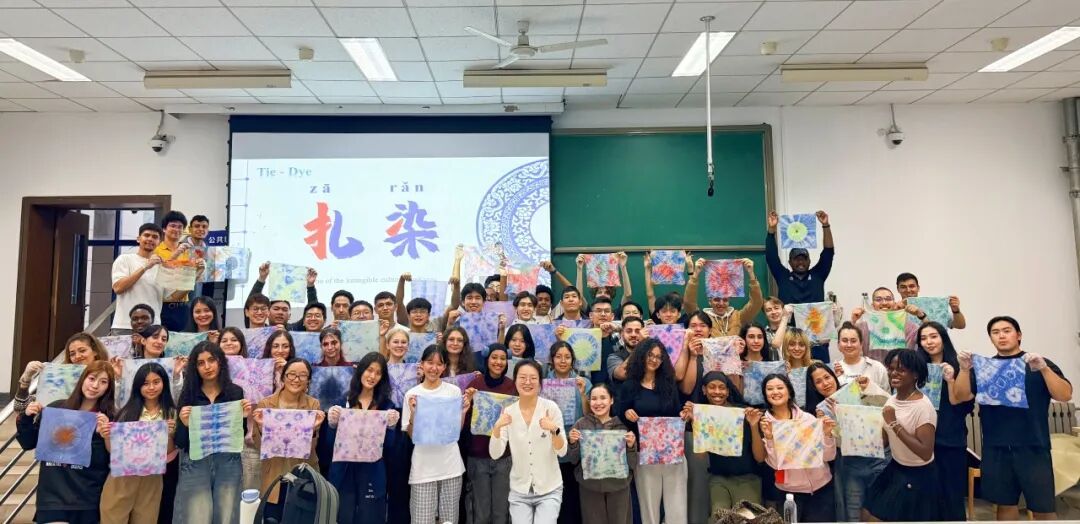
Through an engaging introduction, the instructors guided students into the world of tie-dyeing, an ancient and distinctive form of Chinese folk art. The students first explored its development over more than 2,000 years before tracing the spread of tie-dyeing techniques along the Silk Road. In doing so, they gained a deeper appreciation of the cultural and spiritual significance the craft has acquired among China’s diverse ethnic communities, as well as its artistic value in international cultural exchange.
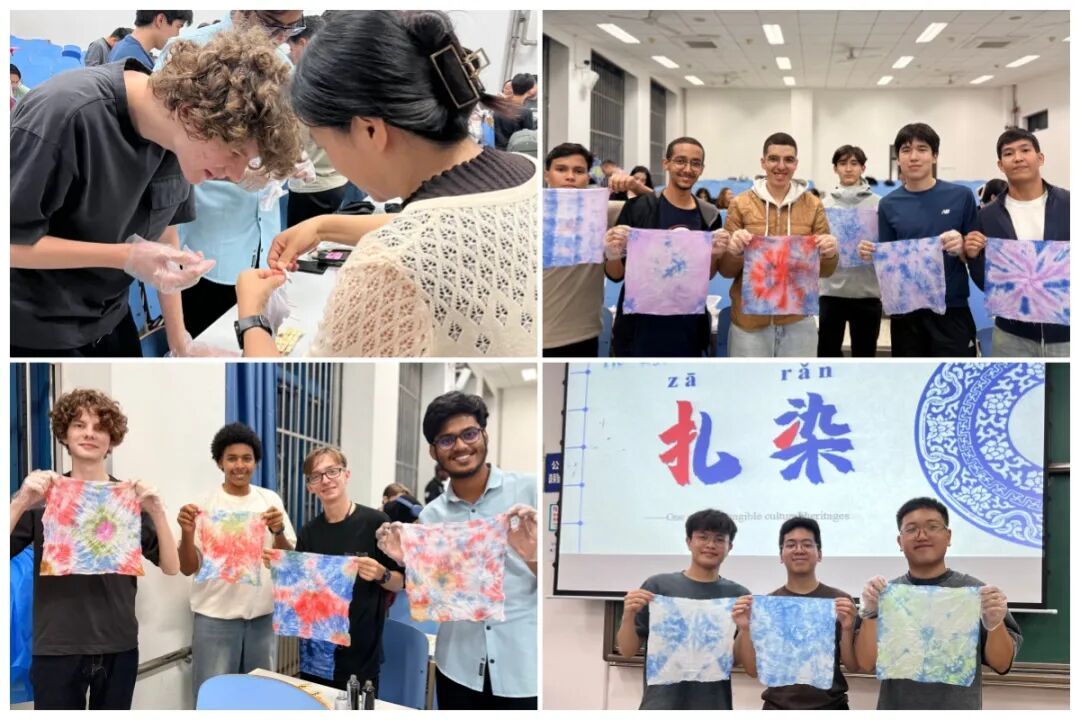
During the hands-on cultural experience, teachers and students embarked on a creative journey of bringing patterns to life through tie-dyeing. Under the instructors’ guidance, the students worked through each step in an orderly manner, from soaking and binding the fabric to dyeing, sealing, and drying it. As the finished pieces were gradually unveiled, each featuring unique patterns and vibrant colors, the students were delighted and proud of what they had created. They eagerly shared the pieces they were most proud of with classmates and teachers, creating a lively and enthusiastic atmosphere.
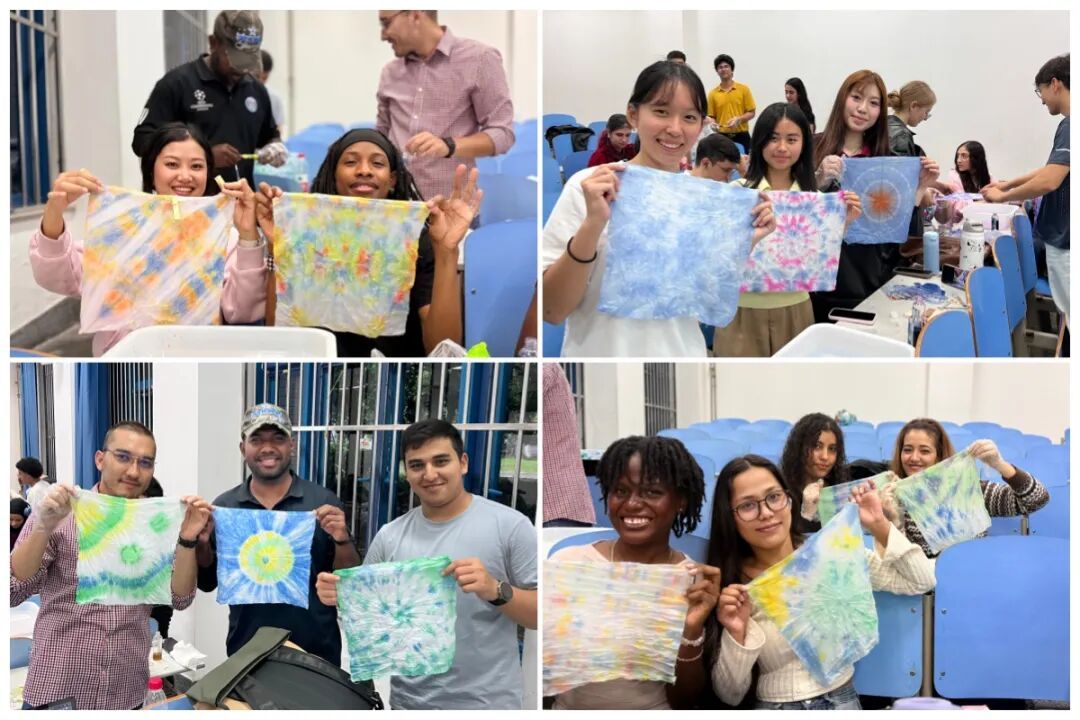
As the session drew to a close, teachers and students engaged in a lively discussion on the contemporary evolution of tie-dyeing. They explored how the craft has expanded beyond its traditional blue-and-white palette to incorporate shades of red, yellow, green, and more, and how it has moved from subtle embellishments on traditional ethnic dress to creative applications in modern fashion, accessories, home décor, and other fields. Through the discussion, the students gained a deeper understanding of the unique appeal of preserving tradition while embracing innovation.
A touch of indigo carries with it the imprint of time. Tie-dyeing is not only an expression of Chinese aesthetics, but also a cultural legacy carried forward by generations of artisans. For international students in China, it also offers a window into the richness and vitality of Chinese culture. Going forward, the International College will continue to explore ways to integrate traditional Chinese culture into China studies education, further improve its teaching and learning mechanisms, and help international students develop well-rounded competencies and a broader global perspective. Through these efforts, the College aims to build bridges for cultural exchange, mutual learning, and appreciation across diverse cultures.
(Photos: Li Jing, Li Dan; Editor: Wang Xinyue; First Reviewer: Li Xuehong; Second Reviewer: An Yiwen; Final Reviewer: Li Ziwei;Translators: Li Yiwen, Mei Leyun)
