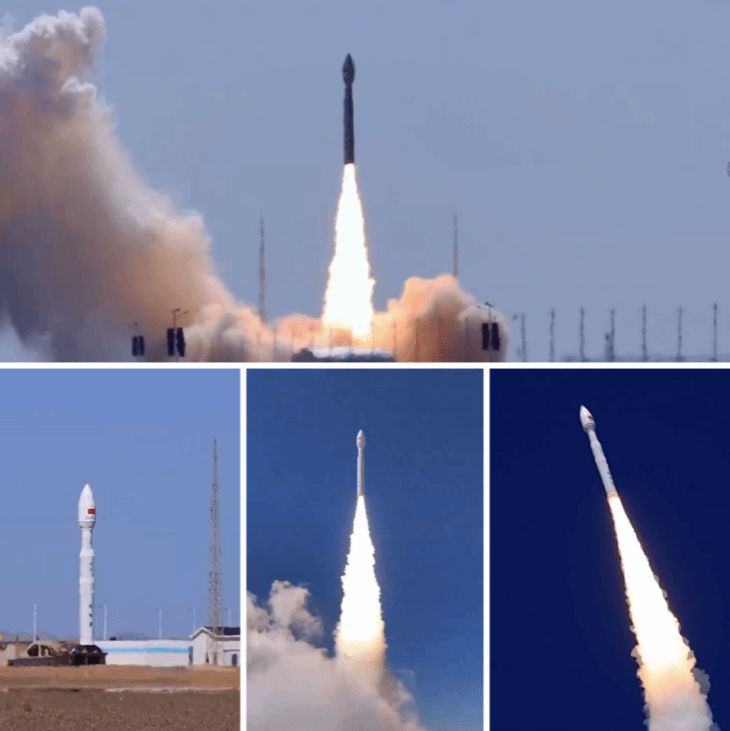
At 12:03 p.m. Beijing time on Sept. 20, 2026, the Qinling 01 and 02 satellites developed and produced by Northwestern Polytechnical University (NPU) were launched from the Jiuquan Satellite Launch Center aboard the “Lijian-1” Y18 Carrier Rocket.
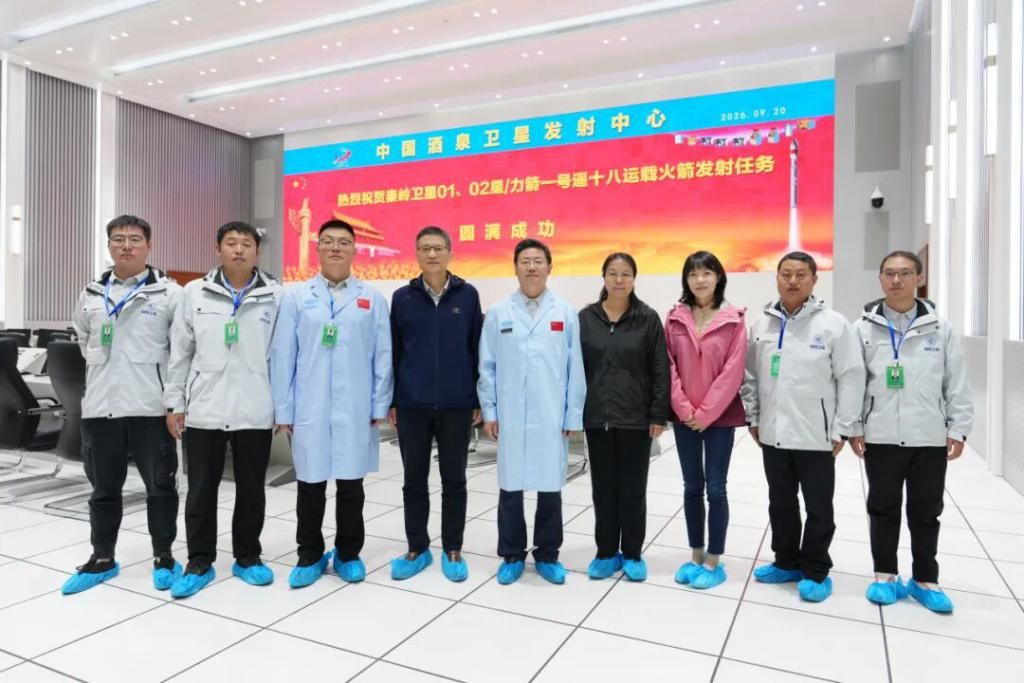
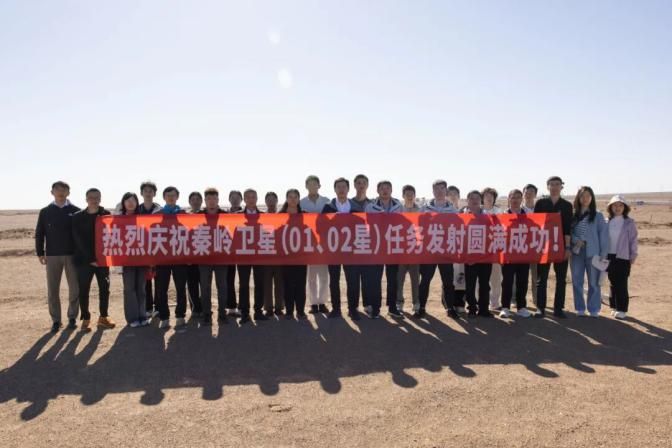
After 728 seconds of flight, Satellite 01 separated from the rocket, and 752 seconds later, Satellites 02 separated as well. Both satellites successfully entered their intended orbits, and all satellite parameters were normal, marking the successful completion of the launch mission. Faculty and student representatives from Northwestern Polytechnical University were invited to observe the launch on site. They also visited the satellite development team led by Professor Zhou Jun, the chief designer of the satellites.
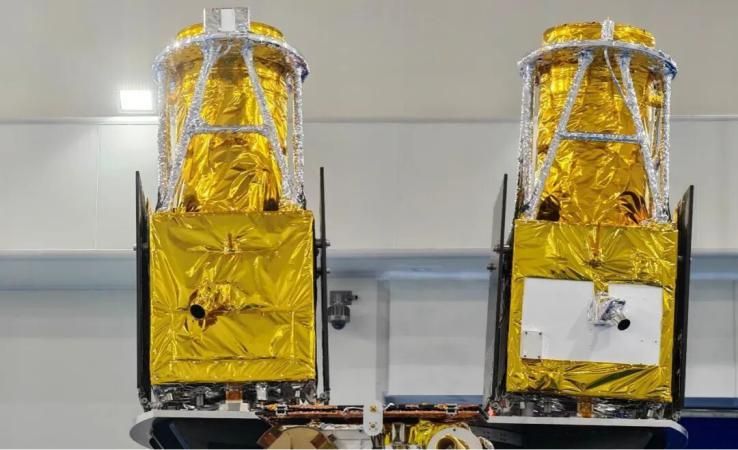
The Qinling 01 and 02 satellites have a mass of 150 kilograms each, with a designed operational life of 5 years. Their payload consists of sub-metric high-resolution “panchromatic + multispectral” cameras, and they operate in a sun-synchronous orbit at an altitude of 500 km. Northwestern Polytechnical University will utilize the self-built “Xi’an + Ningbo” dual control and monitoring centers together with the network of ground stations to carry out various in-orbit tests for the Qinling satellites 01 and 02, as well as provide long-term management throughout their entire operational life cycle. This work includes satellite control and monitoring, status assessment, mission planning, preparation of operational instructions, reception, storage, distribution of remote sensing data, and the development of innovative applications for such data
Live images of the Qinling satellites (01 and 02) being launched
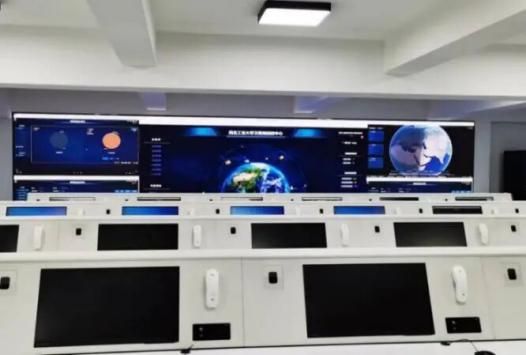

The “Dual Centers” for Satellite Measurement, Operation and Control at Northwestern Polytechnical University
The Qinling Satellites 01 and 02 project was officially approved for initiation in October 2022 by the Shaanxi Provincial Development and Reform Commission. As the first pair of satellites in the “Qinling Constellation”, these high-resolution remote sensing satellites are designed to support the ecological protection of the Qinling region as well as its sustainable economic development; they also constitute an important infrastructure for public data processing in Shaanxi Province. According to the plans, the Qinling Constellation will consist of 36 satellites capable of capturing visible-light and hyperspectral imagery and collecting data using SAR technology, thereby providing high spatial and temporal resolution remote sensing services for the Qinling region and the Yellow River basin.
The National Innovation Team for Microsatellite Technology and Applications, as well as the National Engineering Laboratory affiliated with NPU’s School of Aerospace, take full advantage of their capabilities in organized research and innovation. To explore new approaches to satellite technology development, overall design, engineering production and process management. To date, they have developed two types of reliable satellite platforms: 100-kilogram class microsatellites and a full range of cubic satellites, which can meet the needs of various payloads. These platforms have broad application prospects in fields such as remote sensing, communications, space science, and the testing of new technologies.

Introduction to the satellite development team
The National Innovation Team for Microsatellite Technology and Applications at NPU is led by Professor Zhou Jun from the School of Aeronautics and Astronautics. It is recognized as a Huang Danian-style Teacher Team among universities across the country, as well as a National-level Science and Technology Innovation Team
The team possesses a strong technical foundation and extensive engineering experience in the overall design of microsatellites, spacecraft dynamics and control, and space situational awareness. It has achieved significant innovative results in satellite intelligence, space-based sensing and computing, space exploration, and the coordination between Earth-based systems and satellites. The team has established National Engineering Laboratory and National International Science and Technology Cooperation Base, and has developed a comprehensive set of technical capabilities for the entire process of microsatellite development, including overall design, assembly and integration, comprehensive testing, environmental testing, telemetry and control, data transmission and reception, and data application.

National-level Science and Technology Innovation Team for Microsatellite Technology and Applications at Northwestern Polytechnical University
The team has successfully developed and launched 7 satellites in the “Aoxian Series,” including the national satellite “Macau Science-1 Satellite B,” the world’s first 12U cubic satellite “Aoxiang Zhixing,” and the Qinling satellite. They have also developed software and hardware systems to support 14 other national satellites. The team has established dual tracking and control centers in Xi’an and Ningbo, as well as the first network of ground stations for tracking, operation, and control, providing solid support for the development of various disciplines such as aerospace engineering, computer science, and communications in universities, and contributing further to the advancement of China as a space power.
The heart reaches beyond the heavens, and the eyes gaze across the distant galaxies. Generation after generation of Northwestern Polytechnic University students have always carried dreams in their hearts and been brave enough to take on responsibilities; They strive with determination and courage on the new journey toward building a strong space power!
Production: Media Office of the NPU Committee of the CPC;
Source: School of Aeronautics;
Text: Zhou Ting, Zhang Jiaolong, Wang Yeyu, Xue Yang.;
Photos: Si Zhe;
Editors: Wang Zihan, Yuan Yang;
Copy Editor: Zhao Yong;
Reviewers: Huang Yue, Fu Yi.;
Translators:Meng Qingnan, Mei Leyun
